Turn SEO traffic into an audience for digital products
SEO traffic > display ads is a shaky business model 😰
It's a good starting point, but the gravy train doesn't roll forever.
Here is a pSEO + AI flow that I've been using recently with great success:
Step 1: Get as much traffic as you can, as fast as you can
If you can write like a beast to hit all of your clusters, go for it.
For me, I scrape or outsource data collection, then use programmatic SEO templates to generate the bulk of my content.
Let's say you're trying to compare the amount of caffeine in 10 different coffee brands. I could create a spreadsheet:
| Brand | Coffee type | Caffeine (mg) |
|---|---|---|
| Starbucks | Espresso | 75 |
| Dunkin' | Espresso | 118 |
With just 3 columns of data and 5 brands:
Starbucks
Dunkin'
Peet's Coffee
Tim Hortons
Caribou Coffee
I can generate 10 articles for Brand 1 vs Brand 2. If I had a list of 10 brands, that number increases to 45!!
If we used code we can also calculate the percentage increase/decrease in caffeine in each brand comparison (and we could also create posts like "What {brand} coffee has the most caffeine?")
buuuut that's for another day! 🤯
Pretty soon, you've got a caffeine in coffee cluster!
What I also do in these posts is have AI generate some content around each of the brands based on the data in the sheet.
None of this "what is Starbucks?" shite.
This is AI content generated based on the data in the spreadsheet. For example:
"Starbucks, with its chic baristas + fancy lingo, serves up a solid 75mg of caffeine in their espresso. But hold onto your mug, because Dunkin' just dunked on 'em! With a whopping 118mg of caffeine, Dunkin' is the energizer bunny of espresso - it just keeps you going and going!"
You get the idea.
- Start with data and templates
- Use them in your prompts (maybe using @ArielleCPX's Bulk Publishing)
- Create comparisons specific to the data
Pretty soon, you'll have a very high-performing caffeine topic cluster and, hopefully, a bunch of traffic.
This is where most people stop.
Get 50k pageviews, you're into Mediavine, ads scripts loaded, let's profit!
But Google is replacing the SERPs with AI, didn't you know? 😈
Let's keep pushing...
2. Capturing emails
Everybody and their dog has an email newsletter these days. It's still one of the absolute best ways to directly reach your audience and build a relationship with them.
Here's how to leverage your traffic before Google takes it away:
- Use a cheap but reliable email provider like MailerLite or EmailOctopus
- Set up popups and in-content forms
- Use ChatGPT to write you an ebook on the core topic of your niche site
- Tip: give ChatGPT some keywords and ask it to come up with a hook
You can use any of the image generation APIs or a simple Canva template to create an interesting cover for your book.
Add the image to your forms, and let the subscribers come!
I personally like to use ConvertBox to A/B test variations to get as many leads as possible.
3. Engage the list and build a relationship
I'm not even going to write this section out. Just read this tweet. This is exactly how I do it too.
Interlude: I know I've shared this before, but this strategy works
It's worth mentioning though that you will likely get much lower engagement and open rates early in the funnel. Cull any subscribers who don't open and keep your list to only the people who want to hear from you!
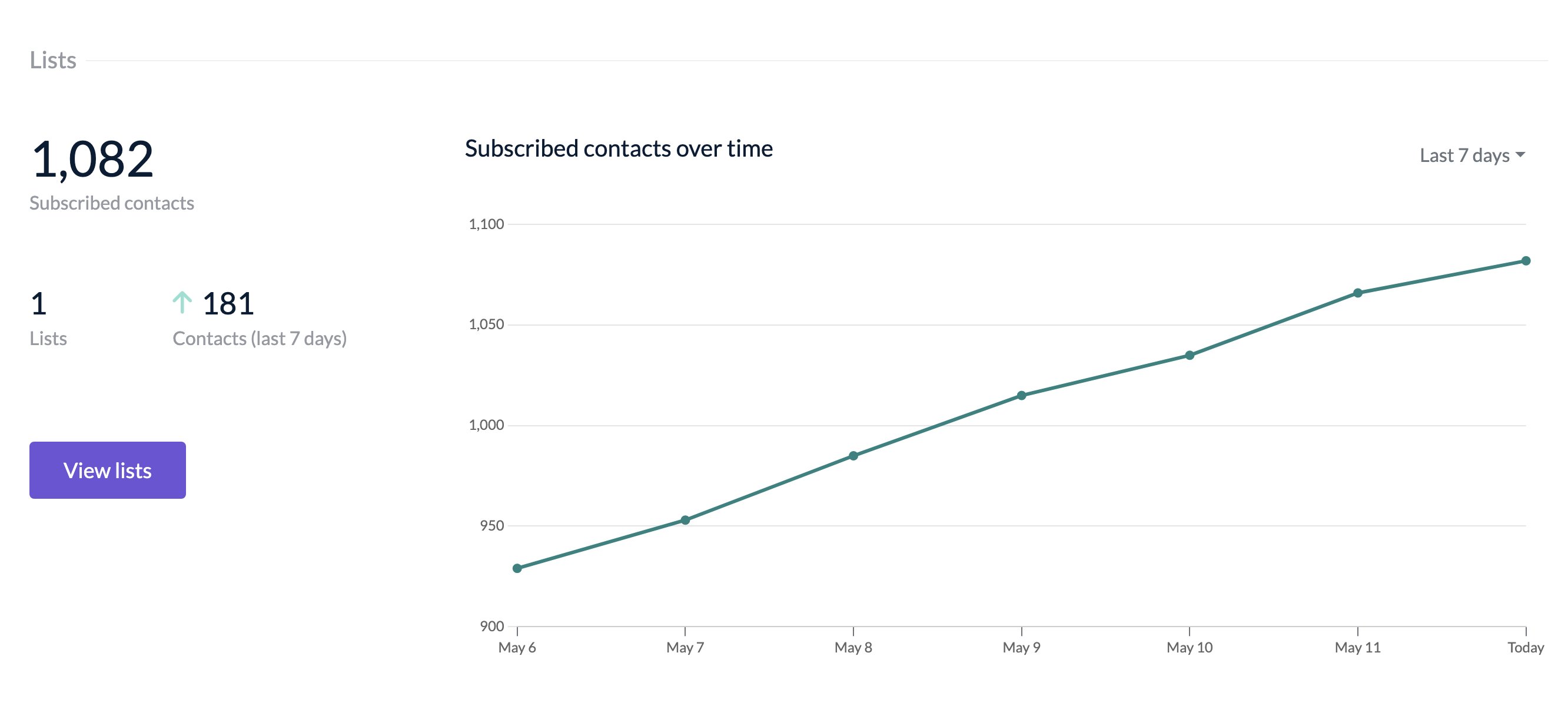
4. Monetise the audience
Once you have a nice list of engaged subscribers, it's time to bid farewell to reliance on ad network revenue.
ChatGPT can help with this too.
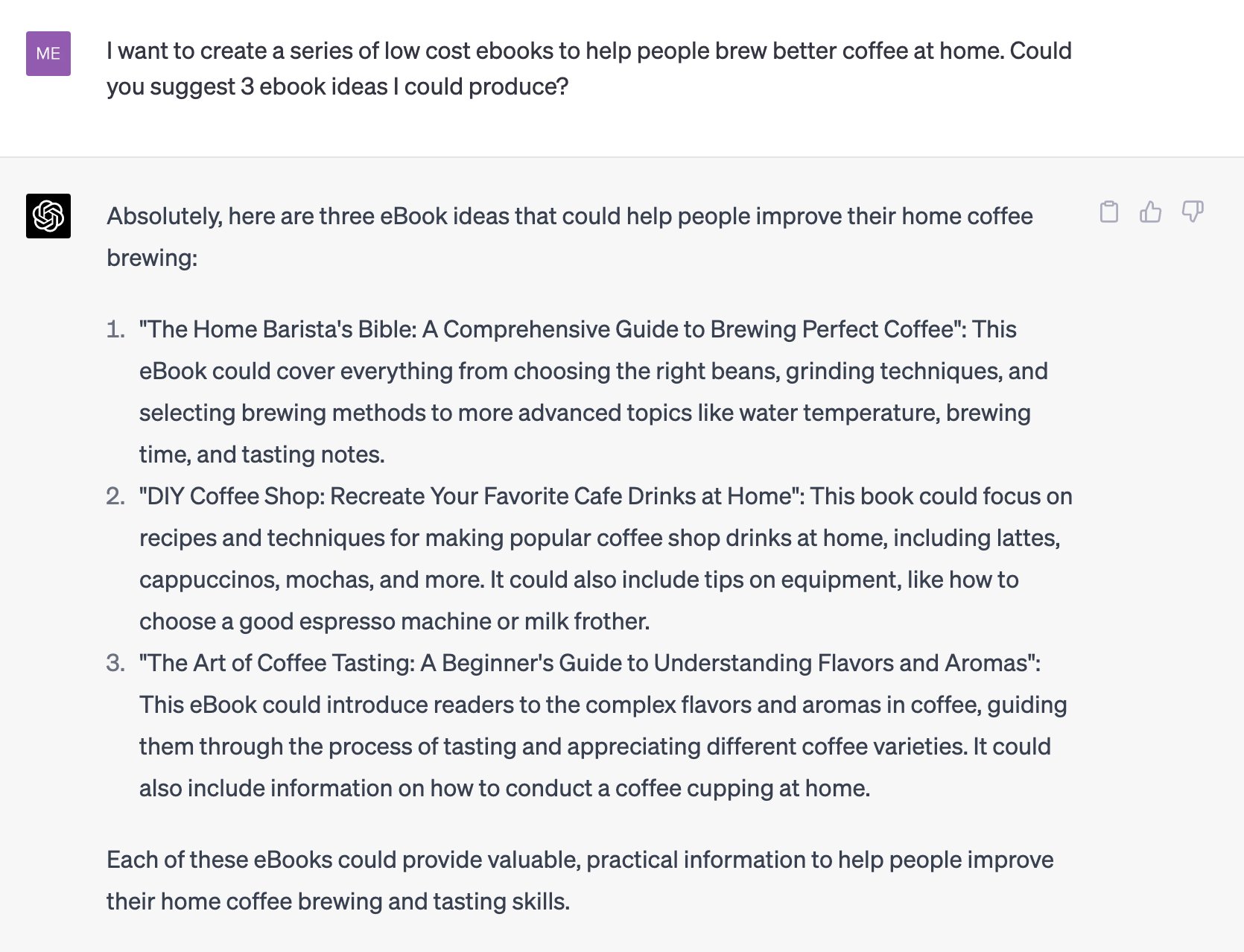
Now we're getting into it!
We can also ask ChatGPT to hook us up with the chapter outline and topics to cover in that chapter as well.
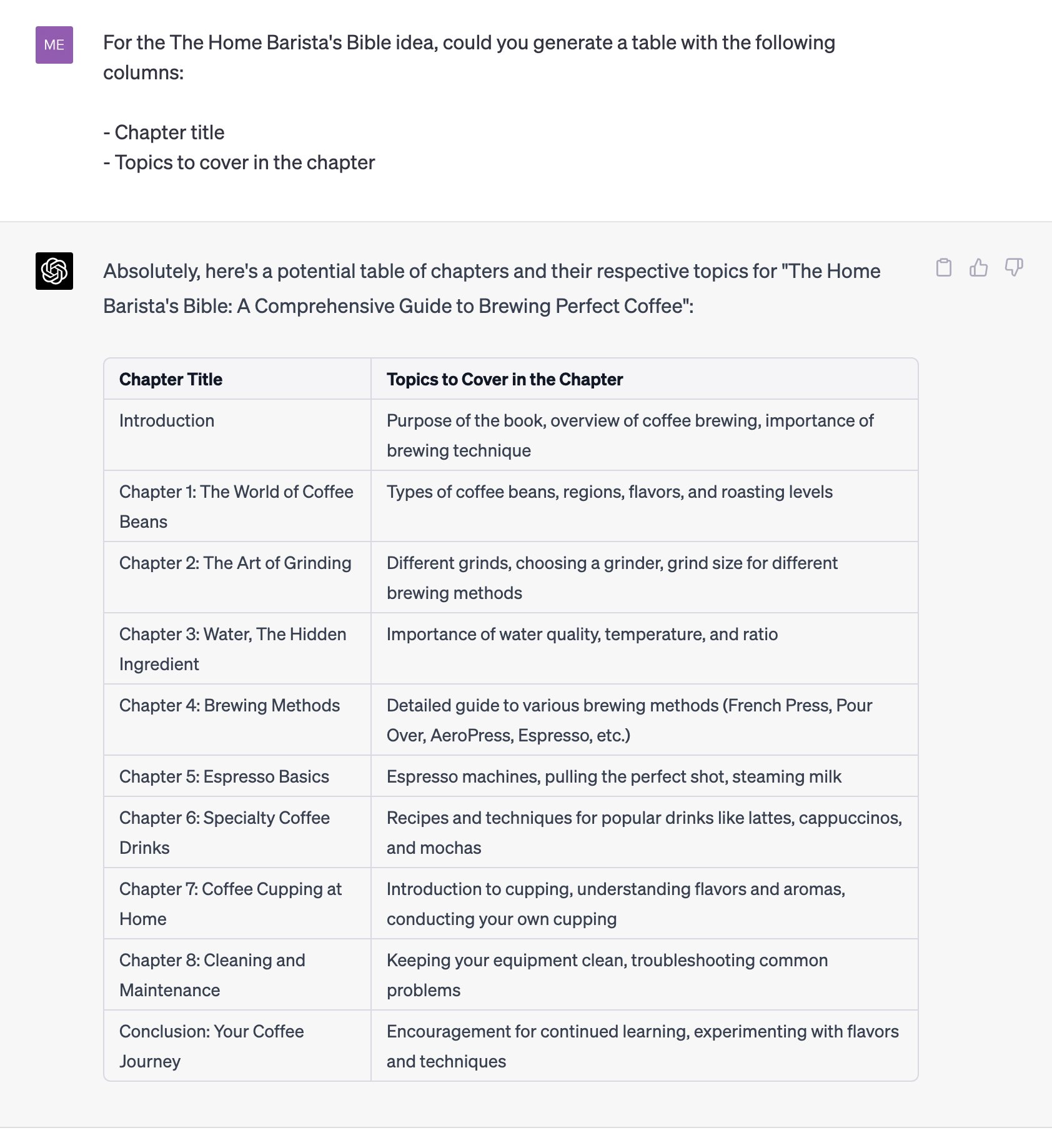
If you had somebody who is clearly interested in coffee because they visited one of your Starbucks caffeine content pages, and then opted into a free ebook about coffee, then it's likely they would also be willing to pay $5 or $10 for this book.
Let's create a chapter with AI!
I'm using http://cuppa.sh (obviously!) for this but you can use whatever AI tool you're familiar with!
Target keyword is going to be the chapter, and I'll add the following to the extra content and intro prompts:
"This is Chapter 1 of a book called "The Home Barista's Bible: A Comprehensive Guide to Brewing Perfect Coffee" and we need to cover the following topics: Types of coffee beans, regions, flavors, and roasting levels."
I'm also choosing "Friendly" tone for this one.
For something like this, I'd go with GPT4 if you can - it just tends to hit the tone right compared to 3.5. Here's what our Chapter 1 might look like:
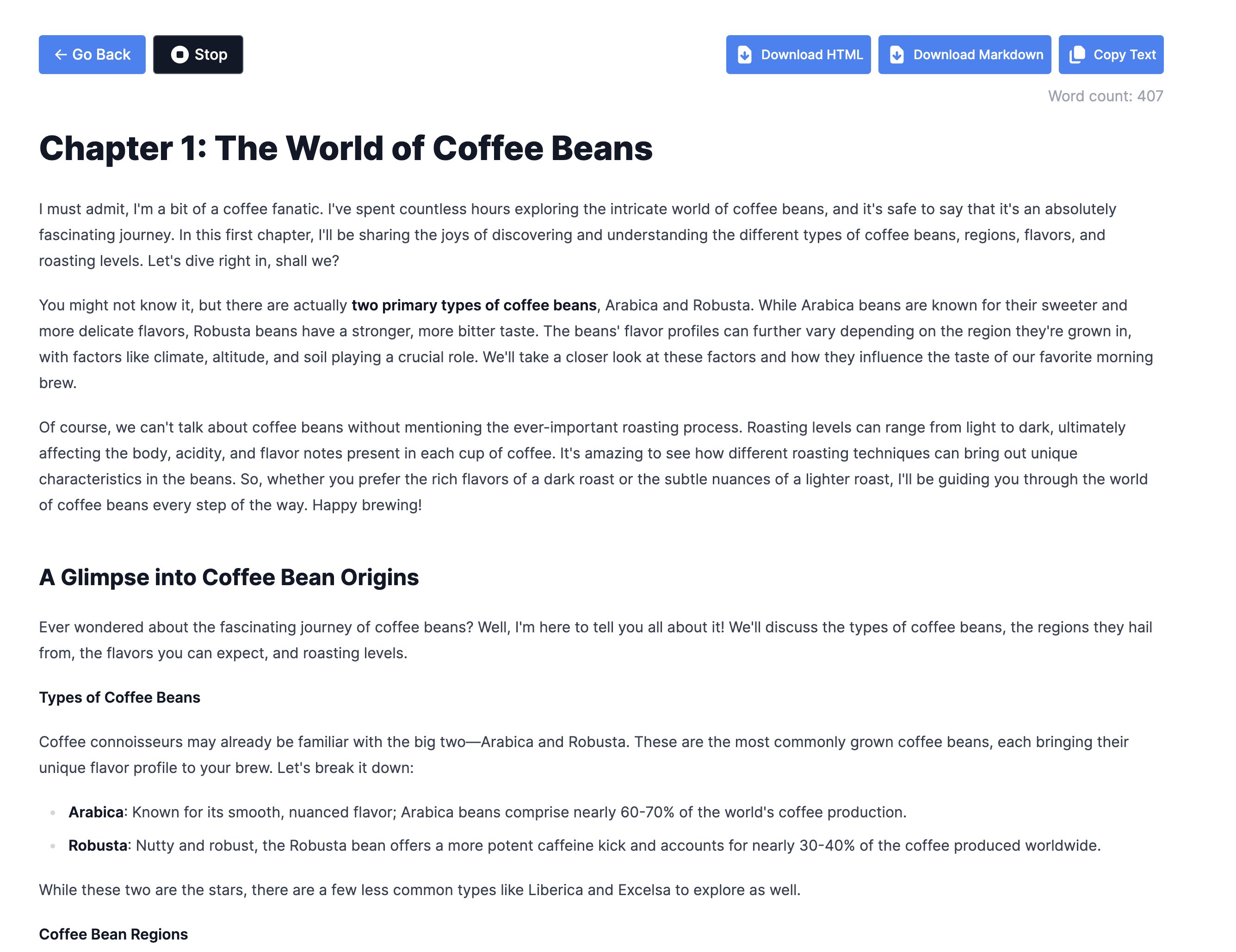
With a solid chapter outline and 1000 words of content per chapter, we can end up with a product of about 10k words in length.
Make this absolutely no-brainer pricing. Test anywhere from $5 to $10. Think of it like a Kindle book and price similarly.
If one book takes off, brainstorm follow-on books. What would the audience want to learn next?
Pretty soon, you've got a library of low-cost, high-value ebooks, and an audience that wants to buy them!
You also don't even need to use ChatGPT for your digital product ideas. Here's another great one depending on your niche 👇