Start a programmatic SEO portfolio on aged domains
I built a $26,000/mo programmatic SEO portfolio that operates with no employees.
If you want to get into pSEO this year, here's how I would do it from scratch:
1. Build on an aged domain
To get explosive results I always look to find and acquire an aged and abandoned site that already ranks in Google.
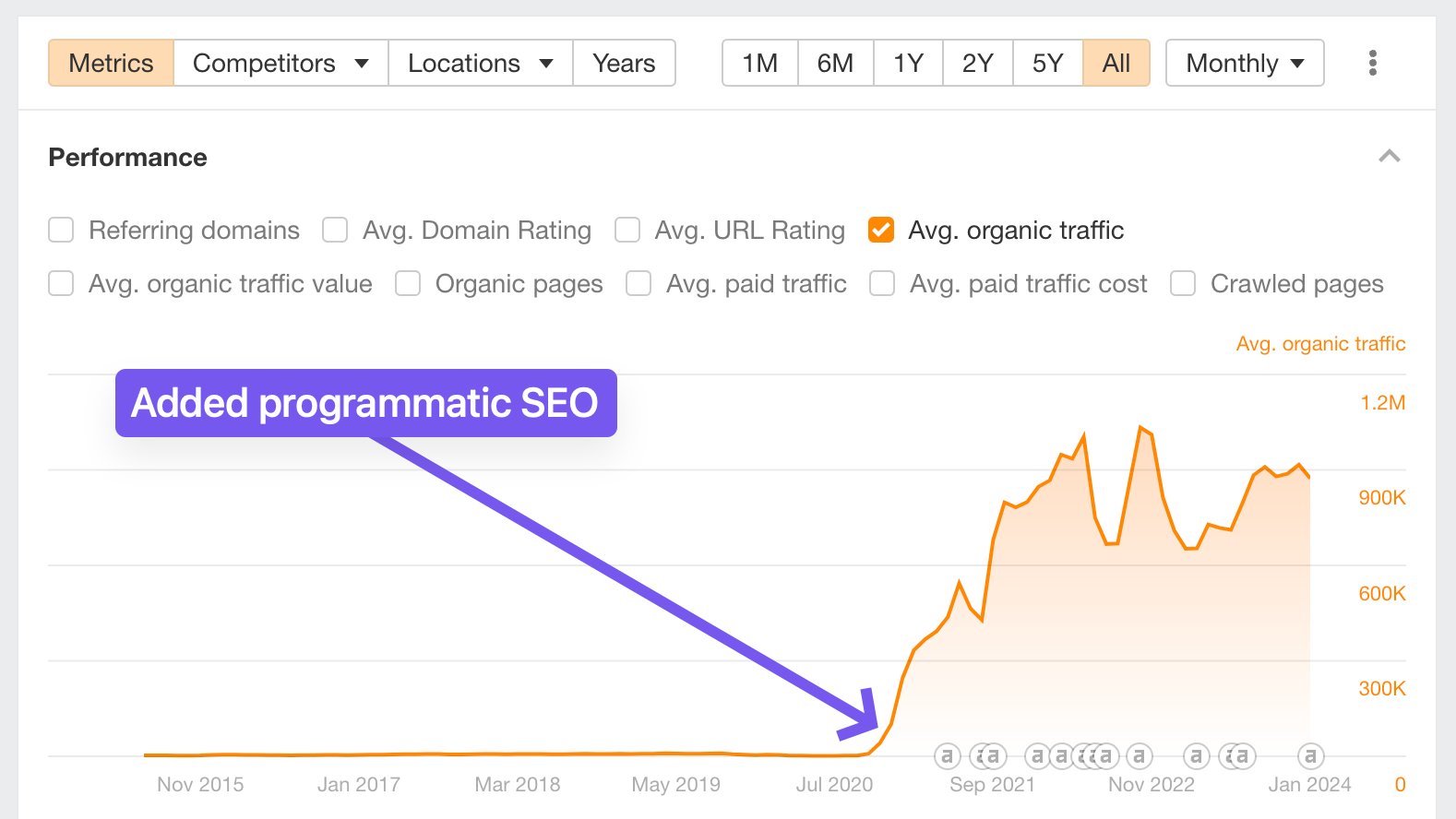
I acquired visualfractions(.com) for $2k and built math calculators on it. Can you guess when I added programmatic SEO? ;)
2. Find repeatable keyword patterns
Location keywords are an easy example: "best beach in {country}" or "best beach in {city}". Taking the time to find good patterns which have a lot of data you can get and manipulate is key.
For Visual Fractions I aggressively targeted very specific fraction calculations and, later, more general math calculations.
This meant millions of pages that answered the very specific problems people were searching for, like: "3 divided by 1/3" or "15/10 as a percentage".
VF was very much a scattergun approach, but it worked. I've since refined my approach to be more targeted on less pages but higher quality.
3. Figure out your internal linking early
If you have a good aged site with authority, make sure your internal link strategy is good. Every page on your site should be reachable from the homepage in 3 clicks or less.
This click depth metric is something Google pays attention to (although we don't know how much) so it's a good rule of thumb.
Let's say you have a site about beaches:
- Home page links to every country
- Every country page links to every city
- Every city page links to every beach
You can also use dynamic sidebars to link to related pages, either randomly, based on distance, or beaches in the same city or country.
4. You need good data
If you use a public dataset that everyone can get, it's not likely you can add more value. You need to find a way to get data that others can't get.
You can do it by either scraping from public places or combining multiple datasets to create something new.
Nomad List is a great example of this. The filters let you get more and more specific on locations based on data like whether it has fast internet, clean air, has good Tinder dating, etc.
The URL structure is amazing:
/top-tinder-places-with-clean-air-in-the-european-union-and-fast-internet/
Here's a good starting point for data sources, but definitely try and find, combine, or build your own:
https://practicalprogrammatic.com/datasets/
5. Spend as much time on your content as you do on the data
The biggest mistake in pSEO is launching with a very simple template and not a lot of content to cover the topic. Some of the articles on Visual Fractions are very thin, but it gets by because of topical relevance.
My best performing pSEO sites include conditional content, data comparisons and trends, charts, tables, and are updated automatically when new data comes in.
A good example of this is:
https://www.in2013dollars.com/us/inflation/2000?amount=100
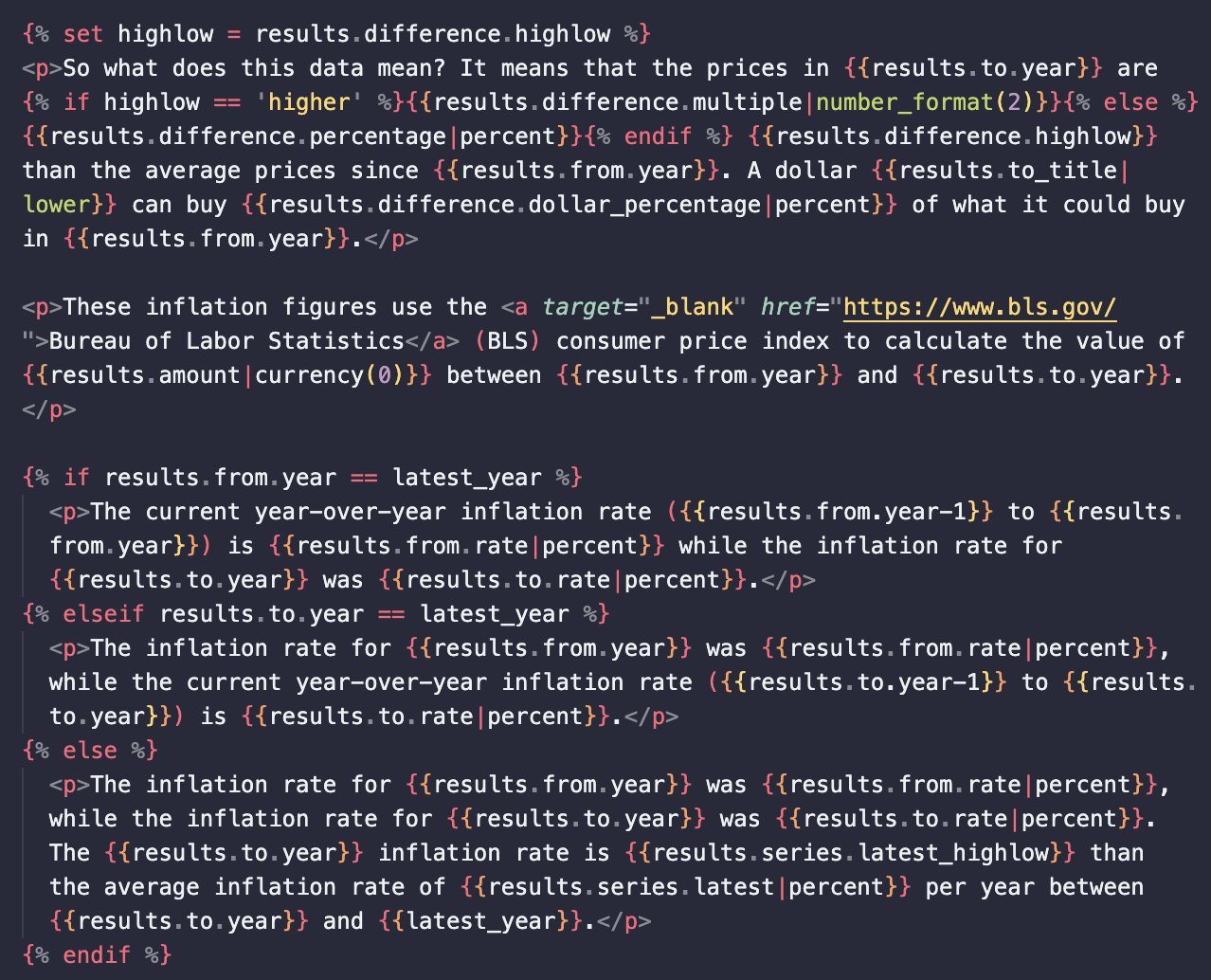
Here's what my template looked like on a competitor site (now sold):
6. More indexed pages = more traffic
Visual Fractions has millions of indexed pages and billions in sitemaps. It's WAY OVERBOARD and not how I would build now, because getting pages indexed is a huge challenge.
What I'd do now:
- Focus on topical clusters of no more than ~2,000 pages at a time
- REALLY nail internal linking
- Target clusters that have useful (and enough) data to share
- Don't create pages purely based on keyword volume if the data doesn't work
XML sitemaps can have up to 50k URLs in them, but I keep them to 10k or less to improve the chances of Google crawling them.
Obviously, I also use http://urlmonitor.com to index pages. I literally built it for myself.
7. Use AI, wisely
Everybody* is launching 100% AI sites in 2024. SEOs experiment and test. You should too.
*maybe not everybody, but it sure feels like it!
But when everybody is doing the same thing, I question it.
Programmatic SEO is not AI, but if you have great data you can absolutely use it to create content around that data.
The reasons I like this strategy:
- It's harder to replicate
- The content is much better when you have parameters to work with
- Less hallucinations from AI
- Your templates are much more unique
I did this with an affiliate site earlier last year and used AI to write content around some data that I had scraped. Haven't touched the site since April, but it makes about $2k a month on autopilot.
8. pSEO is traffic acquisition, not the end goal
I use programmatic SEO because you can scale very quickly and you can see what works and doesn't for your site or niche.
It's also a lot cheaper than hiring a content team.
When you see what topics are ranking, you can plan out laser-focused blog posts to drill down further, hitting the high RPM keywords.
On top of that, you can add email newsletter forms to convert traffic to readers that you build a relationship with over time.
If I can't see a path to move beyond display ads and SEO traffic, it's not viable long-term.
For me, that is going to look like this:
pSEO traffic -> email list -> digital products -> stable profits
The sites I have that don't fit this, I'm leaving to die. Selling them is too much hard work for too little gain!
9. Programmatic SEO is still mostly just SEO
It's still content and links.
pSEO is a way to create a lot more content in a very short (comparatively) amount of time. That's it.
10. Buy my course
I'm not going to shill it here, most people probably follow me because of pSEO anyway, but if you want to learn more about how to get started with code, no-code, WordPress, AI, and more, check it out:
http://practicalprogrammatic.com